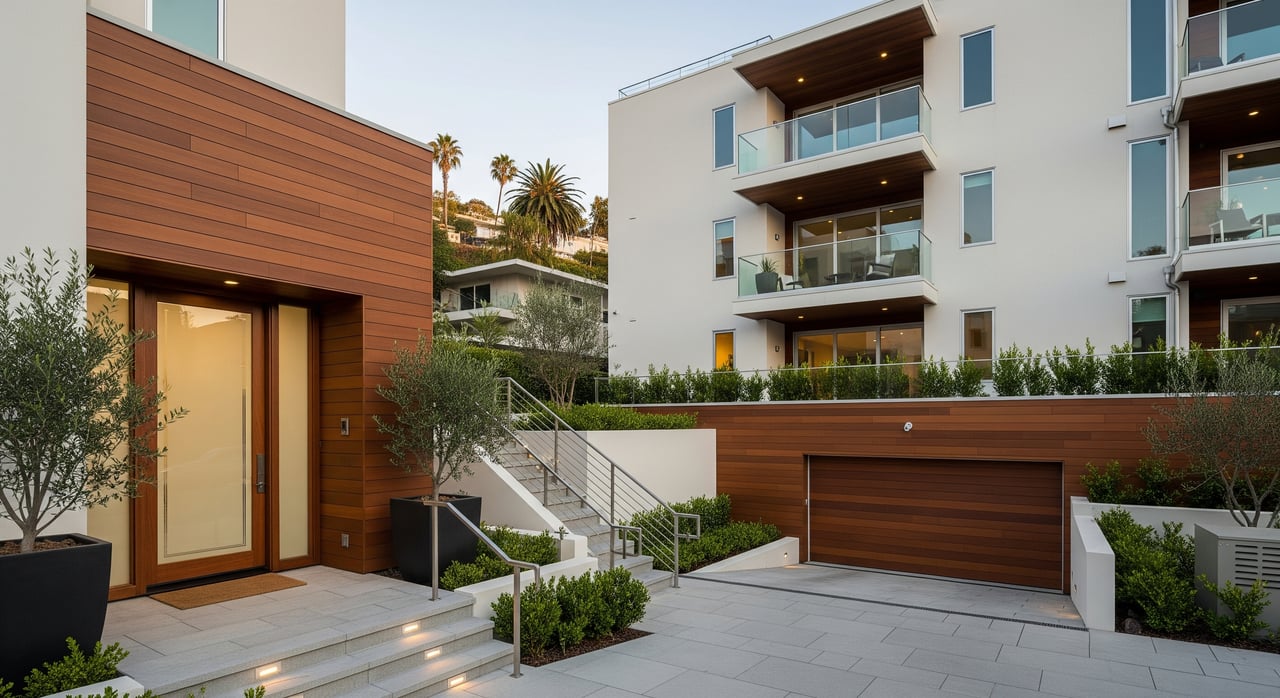
Trying to decide between a condo and a townhome in Vista? You are not alone. Both options can be smart picks for first-time buyers and downsizers, but the differences are not only about how they look. In California, the legal setup and HOA rules drive how you live, what you maintain, and how you finance your home. In this guide, you will learn how condos and townhomes differ in ownership, HOA responsibilities, maintenance, and budget impacts in Vista so you can choose with confidence. Let’s dive in.
What “condo” and “townhome” mean in California
In California, the biggest difference is the legal title, not the building style. A condominium gives you individual ownership of your unit’s airspace plus a shared interest in common areas. A townhome often looks like an attached single-family home with a small yard, but it can be either fee-simple ownership or set up legally as a condominium.
Because of that, the recorded documents matter more than the façade. Check the legal description, the CC&Rs, and the condo plan or parcel map to see who owns and maintains what. California’s Davis-Stirling Common Interest Development Act governs how HOAs operate, which affects budgets, reserves, meetings, and owner rights.
Who maintains what
Typical HOA responsibilities
- Common areas such as landscaping, walkways, lighting, pools, and clubhouses.
- Reserve fund management for items like roof replacement, repainting, and paving.
- In many condominium projects, major exterior elements like roofs, exterior walls, siding, and shared structures.
Typical owner responsibilities
- Condos: you usually handle the interior finishes and systems. The HOA often handles the exterior shell, but always verify the insurance and maintenance maps in the CC&Rs.
- Fee-simple townhomes: you often maintain your exterior, roof, and any yard space. The HOA still manages shared areas and may enforce exterior standards.
Vista community mix to expect
Vista has a blend of older complexes from the 1970s through the 1990s and newer infill townhome communities from the 2000s forward. Older HOAs may be entering big capital cycles, like roof or deck work. Newer developments may have tighter rules and rental restrictions, especially early on.
Maintenance and lifecycle costs in Vista
What you maintain drives your long-term costs and time.
- Exterior envelope: In condo-titled projects, the HOA typically handles roofs and exterior walls on a schedule. In fee-simple townhomes, you may budget for roof replacement on a 20 to 40-year cycle and repainting every 7 to 15 years.
- Landscaping and common areas: Often HOA-managed in both condos and many townhome communities.
- Inside systems: HVAC, plumbing, and electrical inside the unit are usually your responsibility in both setups.
- Termite and moisture: In San Diego County, termite inspections and repairs are common. Responsibility depends on the CC&Rs, and older structures may see more wood and deck repairs.
Vista’s terrain and climate add a few items to check. Sloped lots can create drainage issues, so review maintenance history and HOA responsibilities for runoff and grading. Sun exposure can wear wood elements and decks faster. Parking rules and surface maintenance also come up often and can include strict enforcement.
Practical steps to reduce surprises:
- Request the most recent reserve study, the last three years of budgets and financials, and records of special assessments.
- Ask for invoices for major work like roofs, paint, paving, and termite treatment.
- Inspect for water stains, roof age, deck condition, and pest reports. Consider a separate roof inspection when the owner is responsible.
Budget and financing impacts
Monthly costs depend on what your HOA covers and what you handle yourself.
- HOA dues: Condos often carry higher dues because the HOA typically includes exterior maintenance, insurance for common areas, and amenities. Townhome dues can be lower when owners handle more exterior items. Always compare what is included, not just the fee amount.
- Insurance: Condo owners typically carry an HO-6 policy for the interior, with the HOA master policy covering common elements. Fee-simple townhome owners usually carry a full dwelling policy such as HO-3 or HO-5. The CC&Rs and insurance map explain who insures what.
- Property taxes: California’s base rate is generally about 1 percent of assessed value plus voter-approved bonds and local assessments. Some newer North County developments include Mello-Roos special taxes, but not all Vista neighborhoods do. Confirm via the title report or tax bill.
- Financing: Lenders review project eligibility. FHA, VA, Fannie Mae, and Freddie Mac have specific condo rules, and older condo projects may lack approvals or have investor ratios or litigation that restrict lending. Fee-simple townhomes are often treated like single-family homes, which can simplify conventional financing.
Key tradeoffs to weigh:
- Lower HOA fee with owner maintenance means you should plan for larger but less frequent expenses like roofs or exterior paint.
- Higher HOA fee with included major maintenance can make costs more predictable, but you have less control and could still face special assessments if reserves are low.
Financing checks to make early:
- Ask whether the project is approved for FHA, VA, Fannie Mae, or Freddie Mac loans.
- Review reserve fund levels and the date of the last reserve study.
- Ask about pending or recent special assessments and any litigation.
Which fits your lifestyle
First-time buyers
If you want predictable monthly costs and low hands-on maintenance, a condo with comprehensive HOA coverage can be a comfortable start. If you prefer more control over your exterior and possibly a lower HOA, a fee-simple townhome can fit, but plan for future roof and paint costs.
Downsizers
If you want to avoid exterior upkeep and enjoy shared amenities, look for condo communities where the HOA handles the building shell and grounds. If you still want some private outdoor space and autonomy, a townhome can work well as long as you budget for occasional major repairs.
Due diligence checklist for Vista buyers
Documents to review before removing contingencies:
- CC&Rs, bylaws, and rules and regulations.
- Current budget, reserve study, and three years of financials.
- HOA meeting minutes for the last 12 to 24 months.
- Master insurance declarations and the coverage map.
- Estoppel certificate with current fees and any liens.
- List of pending litigation and judgments.
- Invoices for recent major projects, including termite work.
- Rental policy and occupancy rules.
Inspections and professional checks:
- General home inspection, plus focused checks on roof, decks, water intrusion, and pest/termite.
- Title report review for easements, CC&Rs, and any special tax districts like Mello-Roos.
- Confirm the HOA management company and fee payment history.
Local context to consider:
- Age of the community and timing of capital projects.
- Proximity to highways, downtown Vista, and employment centers for day-to-day convenience and resale appeal.
- Parking supply and enforcement, including guest parking rules.
How The Malkiewicz Team supports your search
You deserve clear guidance and a smooth closing. Our principal-led team knows North San Diego County’s condo and townhome communities, including Vista’s older HOAs and newer infill projects. We help you compare CC&Rs, budgets, reserves, and insurance maps, and we coordinate inspections and disclosures through our on-team transaction coordinator. Our trusted lending and title partners help confirm project eligibility early, so you can make a confident offer without last-minute surprises.
Ready to explore Vista condos and townhomes with a local advocate at your side? Connect with The Malkiewicz Team to start your search and compare your best options.
FAQs
In Vista, which is cheaper monthly: a condo or a townhome?
- It depends on what the HOA covers. Condos often have higher dues that include exterior maintenance and insurance, while townhomes may have lower dues but higher out-of-pocket exterior costs.
In California HOAs, who pays for a new roof on my Vista home?
- Check the CC&Rs and the insurance map. In many condo projects the HOA pays, while in fee-simple townhome communities the owner often pays.
Are Vista condos harder to finance than townhomes?
- Some condo projects may not meet FHA or conventional project approvals due to litigation or investor ratios, which can limit options. Fee-simple townhomes often follow single-family rules and can be easier to finance.
What should a downsizer in Vista consider when choosing?
- If you want low hands-on maintenance and predictable costs, a condo with broad HOA coverage can be a strong fit. If you want more control and possibly a lower HOA, a townhome works if you budget for major exterior items.
What are common risks to watch for in Vista communities?
- Aging HOA infrastructure that could lead to special assessments, unclear insurance responsibilities, financing restrictions on older condo projects, parking enforcement, and drainage or deck wear from local conditions.