Pull up two listings side by side, one in Vista, one in San Marcos, both priced in the high $800,000s, both three or four bedrooms, both reasonably updated. On paper they look like the same decision wearing two different zip codes. Then watch what happens over the next month. The San Marcos listing goes pending in three weeks with two competing offers. The Vista listing is still sitting there at week six, maybe with one offer, maybe with none.
Same price. Very different outcome. That gap is the actual story, and it has almost nothing to do with which city is "better."
Even the price story itself depends on who you ask. Redfin's closed-sale data has Vista's median at $858,000 in January 2026, up 3.3% from a year earlier, and San Marcos at $925,000 in March 2026, up 2.2%. Zillow's estimated-value index, which tracks typical home values rather than actual closed sales, tells a different story for the same stretch of 2026: Vista down 3.6% year over year and San Marcos down 3.1%, as of June. Two respected sources, two different directions, same two cities, same rough window of time.
If the price trend itself is this noisy, it's not the number to build a decision around. The number that holds steady across every source is speed. San Marcos homes are moving in about three weeks. Vista homes are taking six to ten. That's not a rounding difference. That's a different market.
Same Score, Different Reality
Redfin scores both markets "very competitive," Vista at 76 out of 100 and San Marcos at 79. Three points apart. If you stopped reading there, you'd assume the two cities behave almost identically.
They don't.
| Vista | San Marcos | |
|---|---|---|
| Median sale price | $858K (Jan 2026) | $925K (Mar 2026) |
| Typical days on market | 44 days (per Redfin); 69 days as of Sept 2026 (per Movoto) | 21 days (per Redfin) |
| Average offers per listing | About 1 | About 2 |
| Redfin competitiveness score | 76 / 100 | 79 / 100 |
| Median price per square foot | $451 (Sept 2026, per Movoto) | $528 (Mar 2026, per Redfin) |
A San Marcos home is typically selling in roughly a third the time of a Vista home, with double the competition, for a similar or higher price per square foot. The composite score barely notices. That's the trap of any single summary number, whether it's a median price or a competitiveness index. It flattens a real mechanism into a rounding error.
What's Actually Being Sold
Here's the mechanism. Vista and San Marcos aren't selling the same product at different speeds. They're selling different products that happen to land in the same price bracket.
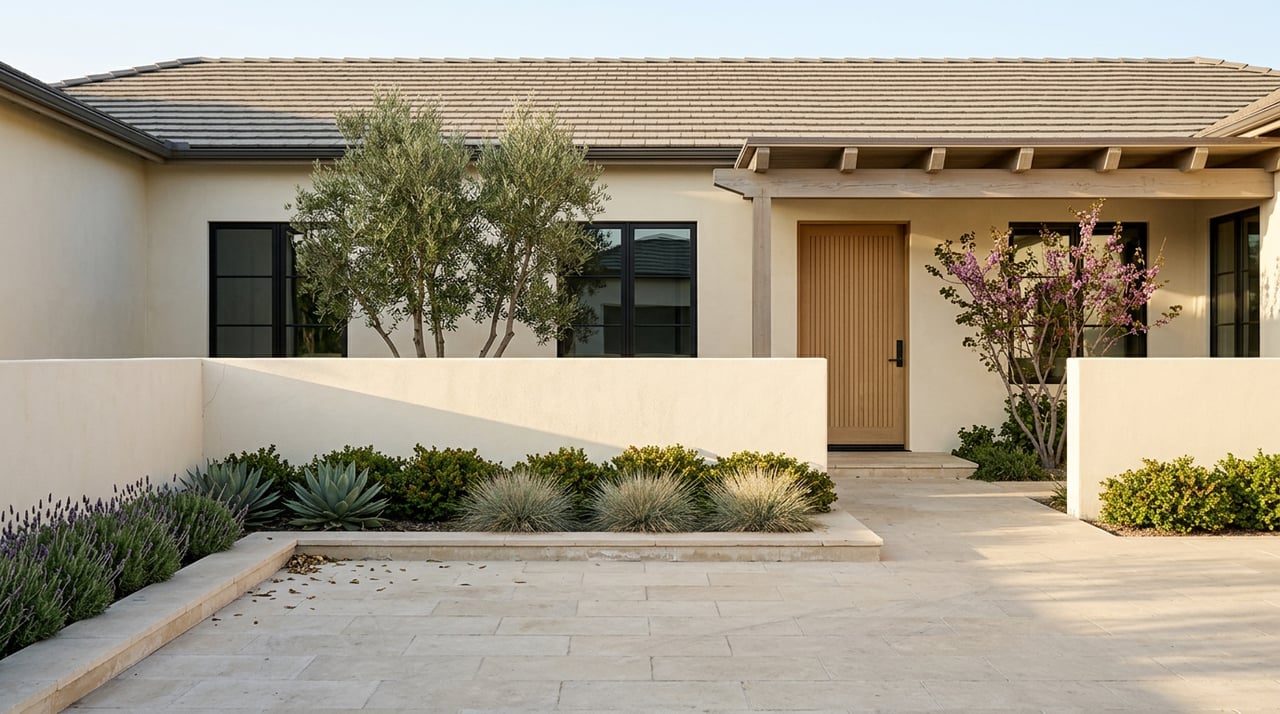
Walk through what's currently coming onto the market in each city. San Marcos has an active new-construction pipeline right now, with roughly three dozen new homes for sale citywide at a median listing price near $860,000. That list includes boutique communities like Pico Place Homes, a collection of just sixteen modern townhomes built with solar panels and a builder warranty included. That's a common shape for new San Marcos supply: attached product, HOA-managed, amenity-bundled, in neighborhoods like Twin Oaks Valley and Rancho Carrillo.
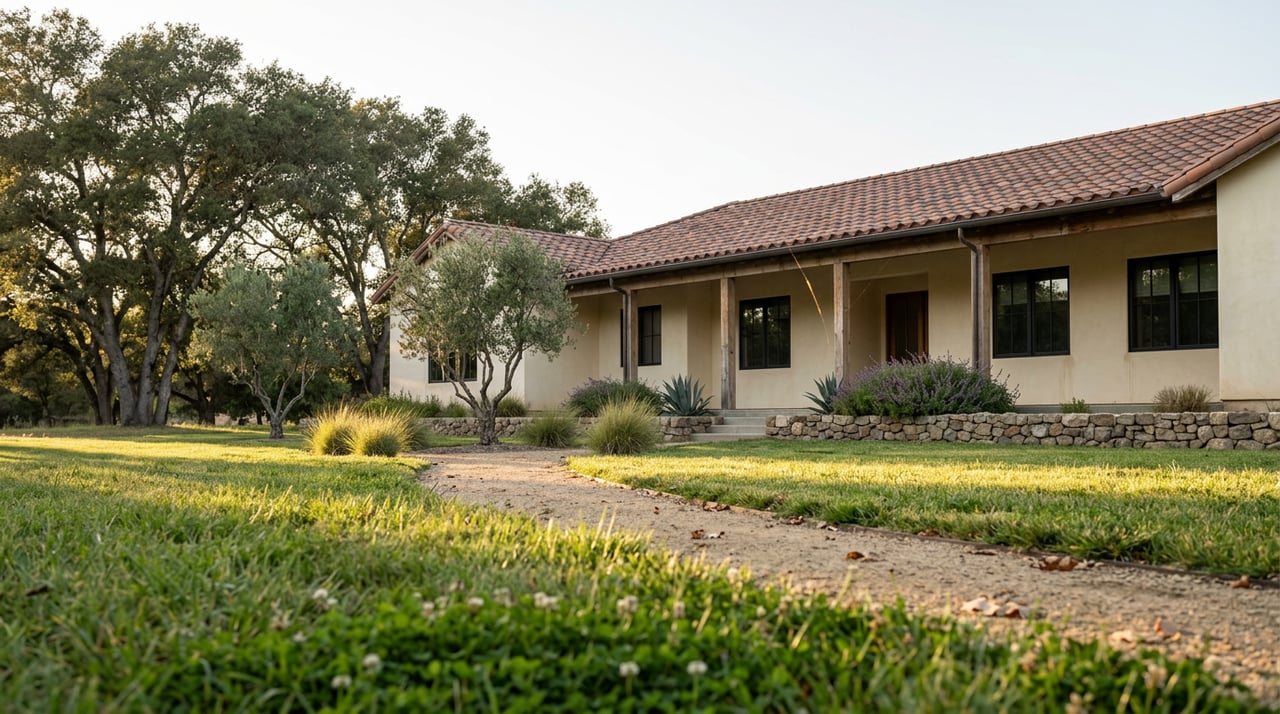
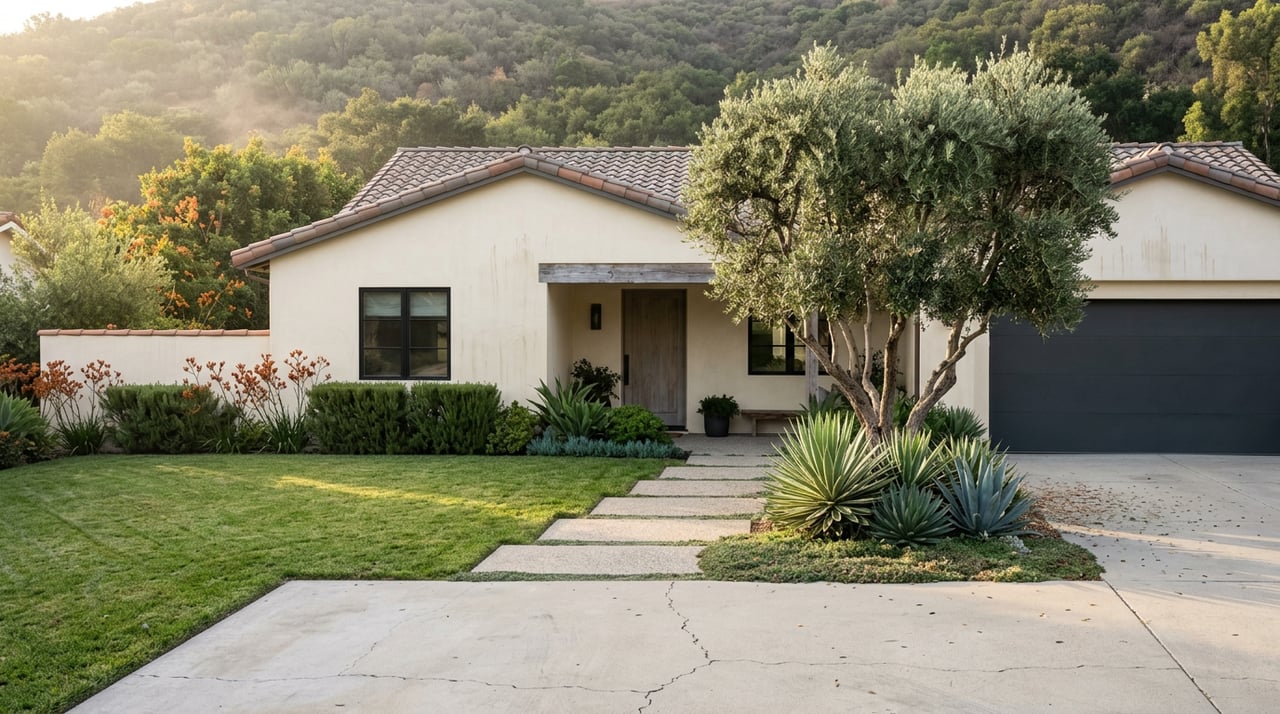
Vista's competing inventory at a similar price point looks different. A recent listing at 217 Camille Way, near Downtown Vista, sat on a lot over 10,000 square feet with no HOA at all, marketed specifically on that absence. That's the more typical Vista profile: older housing stock, bigger lots, detached, and frequently free of a monthly association fee.
Neither city is purely one thing. Vista is building new HOA-governed product too. A new luxury enclave off Melrose Way in South Vista released its first phase of nine homes on a new cul-de-sac earlier this year, and it comes with the same bundled-amenity structure you'd find in a San Marcos planned community. San Marcos still has plenty of older, non-HOA single-family stock scattered through its established neighborhoods. But the center of gravity in each city's current inventory points in opposite directions, and that difference is doing more work than the sale price ever will.
A local market analysis of San Marcos put it plainly: buyers will pay an HOA fee if the lifestyle value behind it is obvious, and they'll push back on price if the amenities feel thin relative to the monthly cost. That single sentence explains a lot of what shows up in the days-on-market column. A well-run HOA in a newer community can accelerate a sale because it removes ambiguity: buyers know what they're getting and what it costs every month. A no-HOA older home in Vista can take longer not because it's worse, but because the buyer has to do more of their own math on maintenance, insurance, and long-term upkeep instead of reading it off an association budget.
The Carrying-Cost Math Buyers Skip
Here's where the median price stops being useful and the monthly number starts. Two homes at $880,000 are not the same purchase if one comes with a $350 monthly HOA dues line and the other comes with none. Over a 30-year hold, that's real money, but it's also real service: landscaping, roof reserves, sometimes a pool or a gate. The Vista buyer paying nothing in dues is also the buyer responsible for every one of those costs directly, on their own timeline, with no reserve fund to draw from.
Statewide, this math is getting sharper. As of mid-2026, only about 18% of California households could afford the median-priced home in the state, according to the California Association of Realtors, which means every recurring monthly cost, HOA dues included, is doing more work in a buyer's qualifying math than it did five years ago. That's part of why HOA-adjacent product in San Marcos moves fast when the value is clear and stalls when it isn't.
Read the HOA's own paperwork before writing an offer, not after. New 2026 state rules tightening HOA fine caps and requiring updated balcony inspection compliance for qualifying buildings mean an association's financial and maintenance records carry more weight than they used to. A healthy reserve fund and a clean inspection history are worth confirming early, especially in newer San Marcos communities where the association itself is still young and hasn't been tested by a major repair yet.
Before comparing a Vista listing to a San Marcos listing on price alone, it's worth asking:
- What is the full monthly HOA dues, and what specifically does it cover
- How funded is the association's reserve account relative to its age
- What would this same square footage and lot size cost to maintain independently, without an association
- Has this specific community completed any required balcony or structural inspections under current state rules
- What did comparable homes with and without HOA dues actually sell for in this neighborhood in the last few months
Where the Line Blurs
None of this makes Vista the "value" city and San Marcos the "convenience" city in any permanent sense. Inventory shifts. A wave of new HOA construction in South Vista could narrow the gap. A cluster of older non-HOA resales hitting the market in San Marcos could do the same from the other direction. The mechanism is durable, the product mix behind it is not fixed. What's fixed is the habit worth building: look past the median and ask what that median is actually attached to.
A Couple of Quick Questions
Is Vista or San Marcos more affordable overall? It depends on how you count. San Marcos carries a higher median sale price and price per square foot, but a faster sale timeline suggests buyers are getting clarity and moving on quickly. Vista's median is somewhat lower, but a longer time on market and the frequent absence of HOA dues mean the total cost picture depends heavily on the specific property, not just the sticker price.
Why do San Marcos homes get more competing offers? Newer, HOA-managed inventory tends to reduce ambiguity for buyers, since maintenance expectations and shared costs are spelled out in association documents. That clarity, paired with an active new-construction pipeline in communities like Twin Oaks Valley, appears to be pulling in more simultaneous offers than Vista's older, more self-managed housing stock typically sees.
Numbers like these change every quarter, and the right answer for one household looks nothing like the right answer for the next. If you're weighing Vista against San Marcos, or trying to figure out what a specific HOA's financials actually mean for your monthly budget, The Malkiewicz Team can walk through the real numbers on a specific address with you, not just the median.